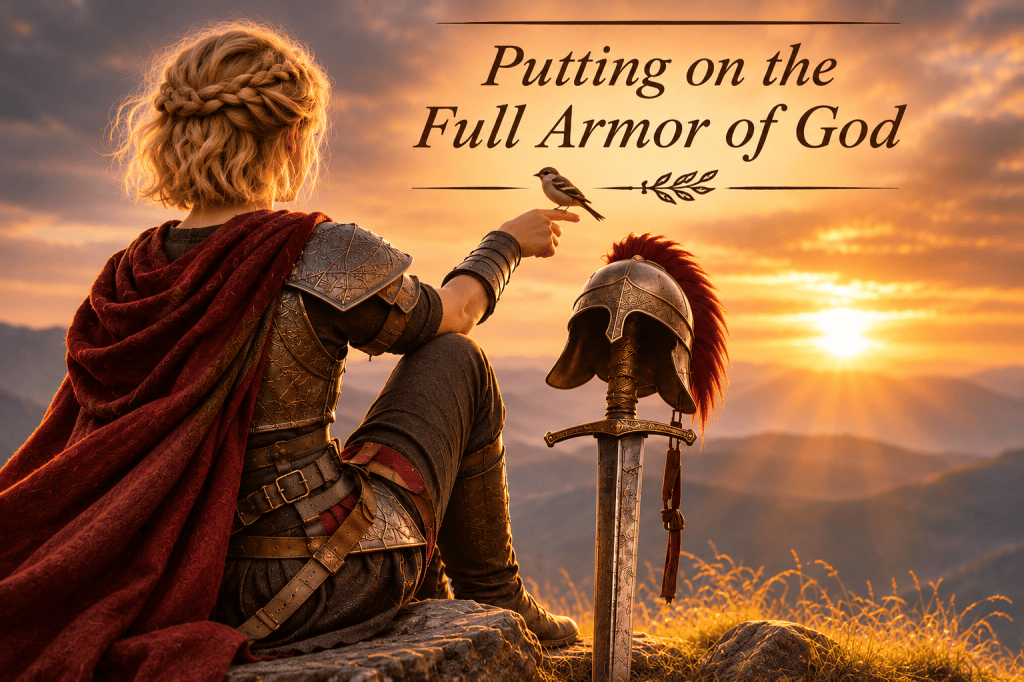
I grew up reading The Chronicles of Narnia by C. S. Lewis and The Lord of the Rings by J. R. R. Tolkien. I have vivid memories of my parents reading Narnia to me, which sparked my desire to learn how to read as quickly as possible.
Those stories filled my imagination with fantasy, other worlds, armor, and fierce battles. Then there was a great talking Lion who, I quickly concluded, even as a young child and before I knew the word allegory, represented Christ.
I wasn’t the little girl who pretended to be a normal princess, the damsel in distress. No. I was the warrior princess.
So, hearing about the Armor of God in Sunday school made my nerdy little heart so happy. Yet, as I grew and matured through various trials and tribulations, I discovered just how important it is to be readied for battle.
Paul was imprisoned when he wrote:
10 Finally, be strengthened by the Lord and by his vast strength. 11 Put on the full armor of God so that you can stand against the schemes of the devil. 12 For our struggle is not against flesh and blood, but against the rulers, against the authorities, against the cosmic powers of this darkness, against evil, spiritual forces in the heavens. 13 For this reason take up the full armor of God, so that you may be able to resist in the evil day, and having prepared everything, to take your stand. 14 Stand, therefore, with truth like a belt around your waist, righteousness like armor on your chest, 15 and your feet sandaled with readiness for the gospel of peace. 16 In every situation take up the shield of faith with which you can extinguish all the flaming arrows of the evil one. 17 Take the helmet of salvation and the sword of the Spirit—which is the word of God. – Ephesians 6:10-17
Paul’s imagery reflects God’s own armor, which is described in Isaiah 59:16-17.
16 He saw that there was no man—
he was amazed that there was no one interceding;
so his own arm brought salvation,
and his own righteousness supported him.
17 He put on righteousness as body armor,
and a helmet of salvation on his head;
he put on garments of vengeance for clothing,
and he wrapped himself in zeal as in a cloak.
At that time, many of Paul’s early readers would have been familiar with the armor of Roman soldiers. Rome was a powerful empire whose military had conquered many territories, and her soldiers were recognizable symbols of its often-corrupt power. For some living under Rome’s shadow, the empire would have represented oppression and suffering.
Here’s the thing we can’t ignore. Remember Ephesians 6:12? Paul reminds us that our struggle isn’t against flesh and blood but against spiritual forces of evil.
I could be wrong here, but I wonder if Paul purposefully used imagery that might have brought Roman soldiers to the minds of his early readers while reminding them that the Romans weren’t their true enemy. It might have felt countercultural. Why? Because Roman authorities persecuted and killed Christians, many times in horrific ways.
Paul understood persecution. Before becoming a hero of the faith, he was a persecutor of Christians. Through God’s grace, his heart and life were dramatically changed. The persecutor became the persecuted.
He endured multiple beatings for sharing the gospel. I wonder how scarred his body might have been. How much of that suffering left permanent marks? I had never really considered that until a few months ago while studying his life.
And remember, he was imprisoned yet again when he wrote this.
To those experiencing persecution, Rome might have seemed like evil personified. Were many of them and their ways evil? Yes. Paul didn’t deny that, nor would he have. But were they their ultimate enemy? No.
So, if our true enemy isn’t flesh and blood but the powers and authorities of darkness and evil, how are we supposed to do battle with the unseen? Sometimes it feels as if we are doing battle with our own shadow. Almost like shadowboxing. What enemy is getting harmed here?
Many times, this battle involves our own minds. Because we live in a broken world corrupted by sin, we face many temptations. A lot of our own failings are entirely our own doing, but since we’re engaged in spiritual warfare, it’s not wrong to wonder if some temptations are brought on by Satan or his followers.
So, we must do battle with the devil, our own minds, and our flesh. This means training ourselves to run from temptation and toward God as He helps renew our minds.
That imagery of “shadowboxing”? The more you practice, the stronger you get, and you may find that resisting temptation becomes easier over time. We won’t reach perfection until Heaven, but we must continue to fight and practice discipline.
26 So I do not run like one who runs aimlessly or box like one beating the air. 27 Instead, I discipline my body and bring it under strict control, so that after preaching to others, I myself will not be disqualified. – 1 Corinthians 9:26-27
Doing battle with our enemies isn’t based on our own skills, discipline, or strength. God has given us tools, weapons, or even gifts to help us. Let’s break down the Armor of God and the importance of each piece.
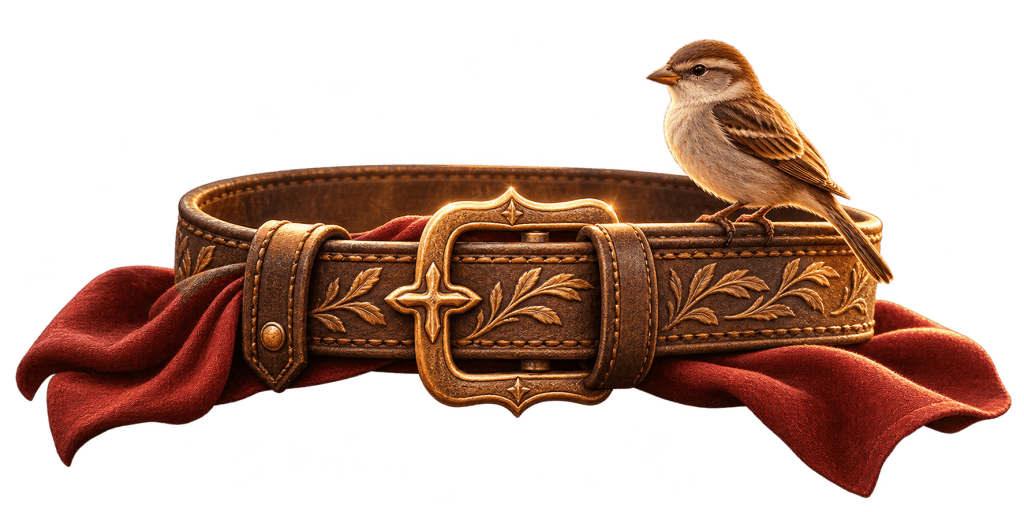
Belt of Truth
Roman soldiers wore belts that secured their clothing and equipment. They could tuck loose clothing into their belts during battle so they wouldn’t trip over it.
What does that mean for us? What truth?
This truth is revealed through Jesus Christ and His Word. God’s Word is true and is the ultimate truth. Because we find truth through Him, we must also reflect that truth in how we live and speak.
20 But that is not how you came to know Christ, 21 assuming you heard about him and were taught by him, as the truth is in Jesus, 22 to take off your former way of life, the old self that is corrupted by deceitful desires, 23 to be renewed in the spirit of your minds, 24 and to put on the new self, the one created according to God’s likeness in righteousness and purity of the truth.
25 Therefore, putting away lying, speak the truth, each one to his neighbor, because we are members of one another. – Ephesians 4:20-25
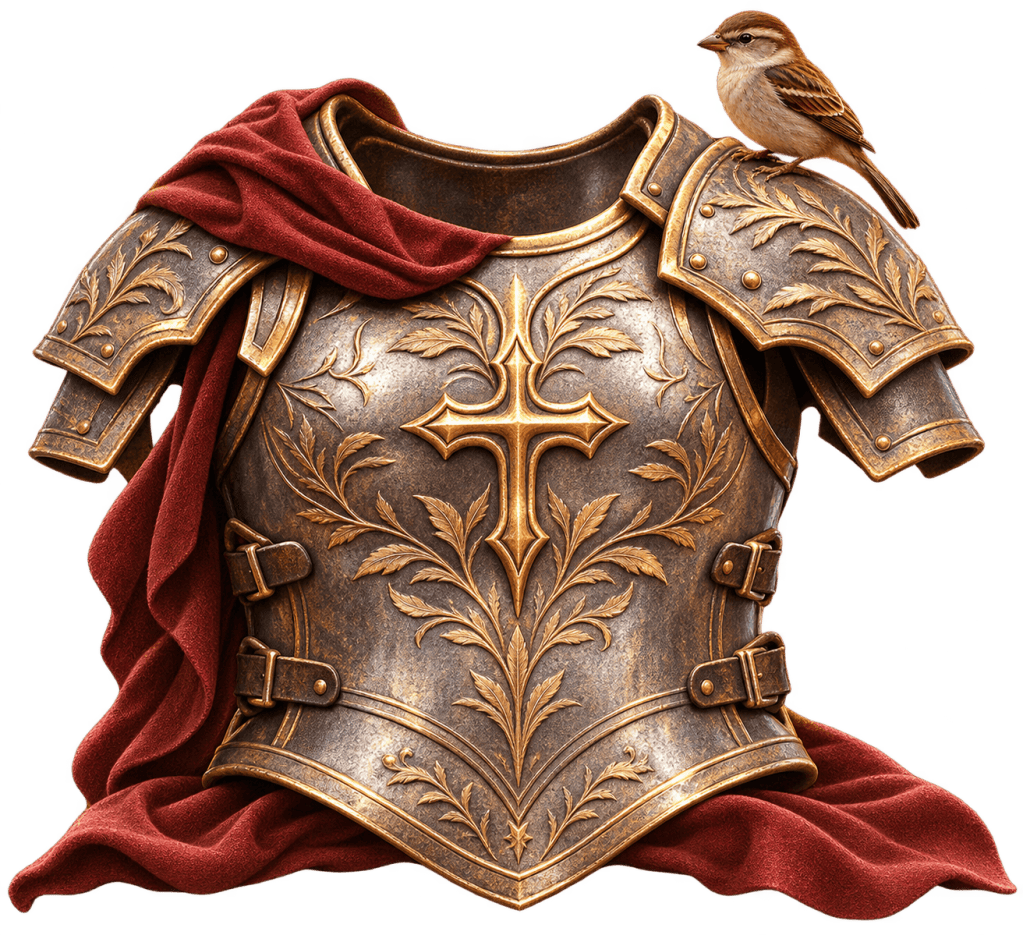
Breastplate of Righteousness
Roman soldiers wore different types of armor, ranging from chain mail to segmented metal armor. Regardless of the type, the breastplate protected the torso and vital organs, including the heart.
This righteousness cannot be obtained through our own efforts. When we receive God’s gift of salvation through faith in Christ, we are clothed with His righteousness. From there, we are responsible for reflecting that righteousness in how we live. Living righteously helps us develop patterns that make it easier to resist temptation, which will always be present.
Remember Ephesians 4:23–24? Paul reminds us to be renewed in our minds and put on the new self, created in God’s likeness, righteousness, and truth.
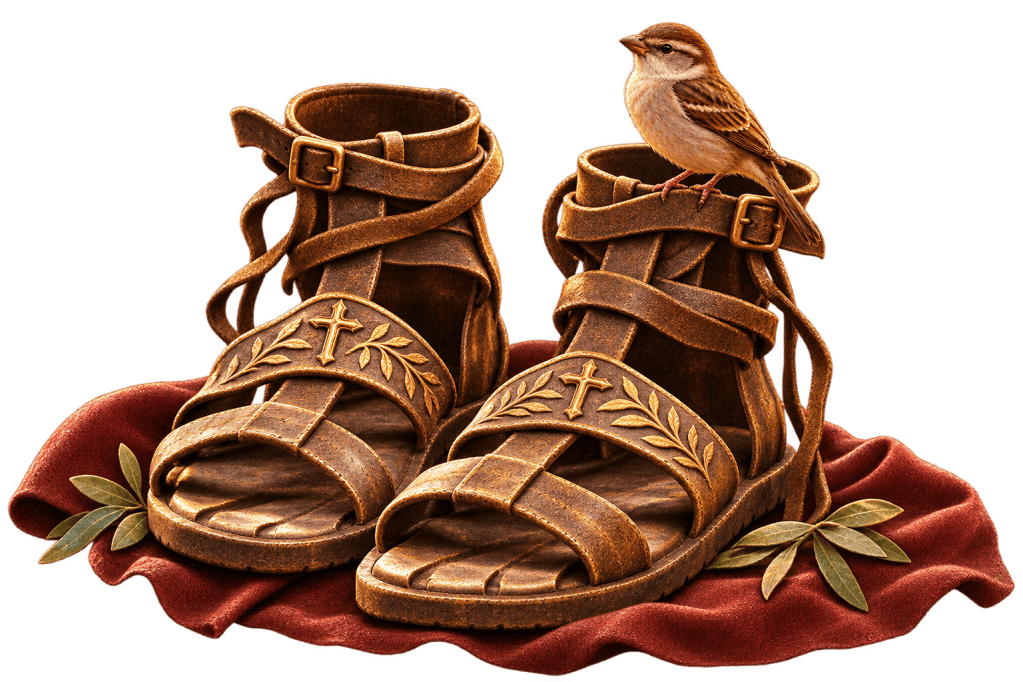
Shoes of Peace
The shoes described here were sandals, but not like the ones we think of today. Some Roman military sandals had leather straps that extended around the ankles for a secure fit and metal studs on the soles for traction. This helped soldiers maintain their footing, even on difficult terrain.
Being readied with the shoes of peace allows us to stand firm in the truth of the gospel and what God has done for us. We should also be ready to share this gospel with others. Remembering the gospel can give us peace, no matter the terrain of our own lives.
Therefore, since we have been justified by faith, we have peace with God through our Lord Jesus Christ. 2 We have also obtained access through him by faith into this grace in which we stand, and we boast in the hope of the glory of God. – Romans 5:1-2
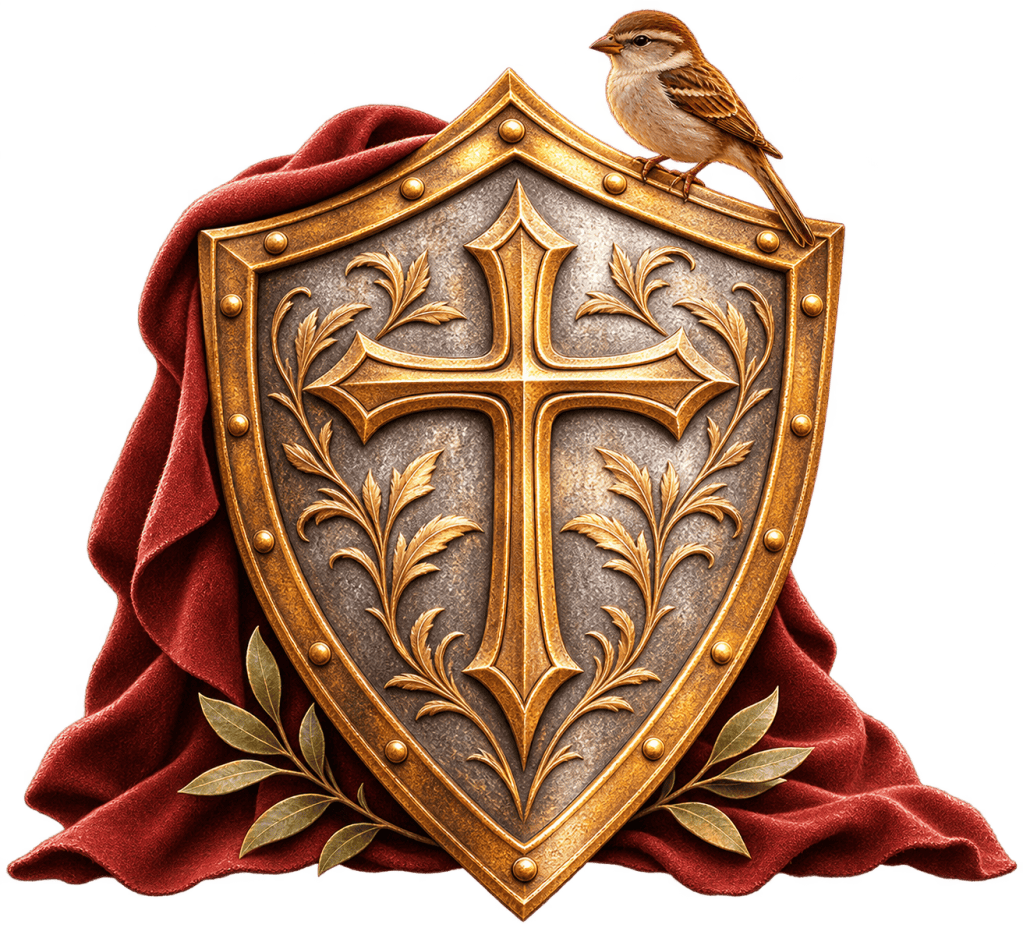
Shield of Faith
Roman soldiers often carried large, sturdy shields to protect themselves from attacks, including flaming arrows.
If we cover ourselves with the shield of faith given to us by God, we can also learn to protect ourselves from the enemy’s flaming arrows. Those attacks could come in the form of whispers and lies about who God is, doubts about Him, lies about ourselves, temptation, and other forms of fear and anxieties. When we place our faith in God, that shield does more than simply block those attacks. It extinguishes them as we trust God and His promises.
In every situation take up the shield of faith with which you can extinguish all the flaming arrows of the evil one. – Ephesians 6:16
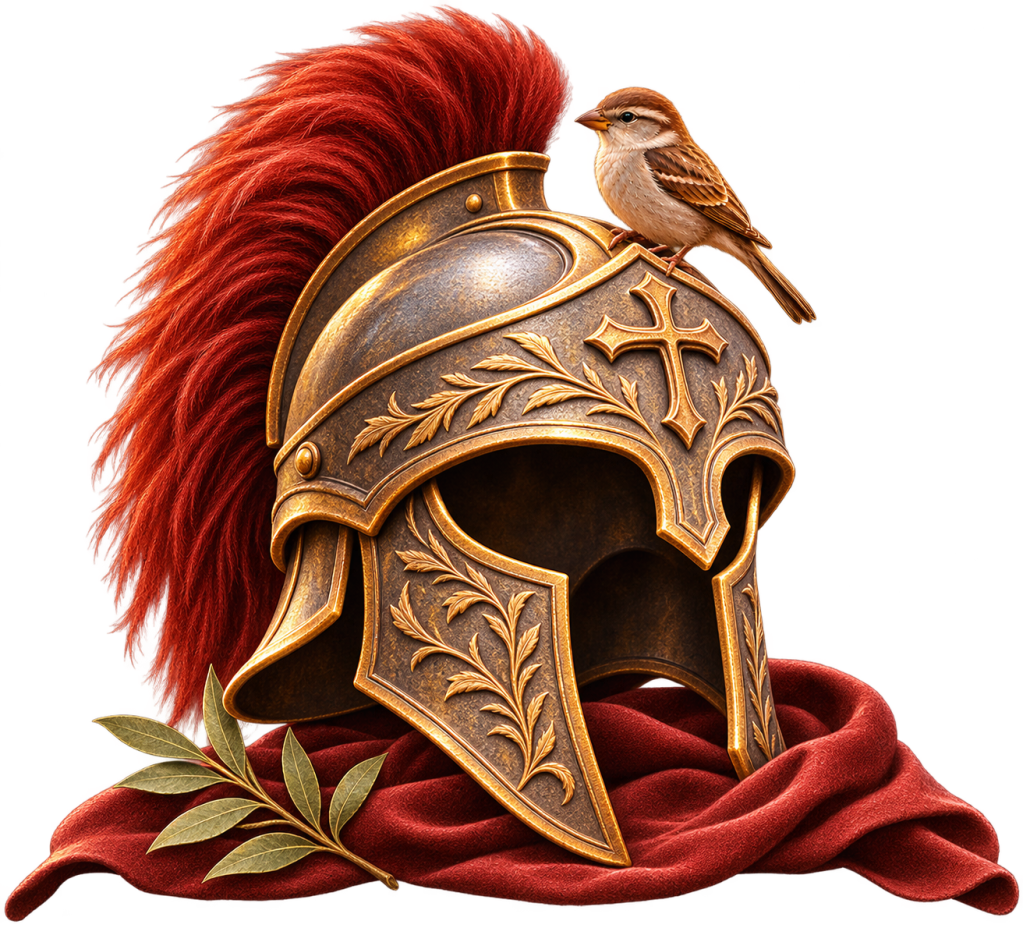
Helmet of Salvation
Roman helmets varied in design, but many protected the face, neck, and, most importantly, the head.
For us as believers, the helmet of salvation reminds us of our hope in Christ and helps guard our minds. We sometimes burden ourselves with trying to be “good” enough to earn salvation. But when we realize that God, through Christ, has accomplished the work necessary for our salvation, we can rest securely in that knowledge.
“8 For you are saved by grace through faith, and this is not from yourselves; it is God’s gift— 9 not from works, so that no one can boast.” – Ephesians 2:8–9

I’m going to pause here briefly.
Some struggle to rest in the assurance of their salvation. They know and believe the truth yet sometimes find themselves wrestling with their own minds and the whispers and lies from our enemy.
This is why this life is sometimes called a battle.
Friend, I know this is easier said than done, but keep fighting! Keep putting on that helmet of salvation.
When you find yourself really struggling to rest in your salvation, I have to wonder if that means you actually are a Christian. If a person is not a Christian, would they really wrestle with that? Would the enemy really whisper doubt in your ear if you weren’t already God’s child?
Either way, when you are struggling to rest in your salvation, please hear me when I say this: Struggling with doubt does not automatically mean you aren’t a Christian. Our assurance rests in Christ and His promises, not in our ability to silence every doubt.
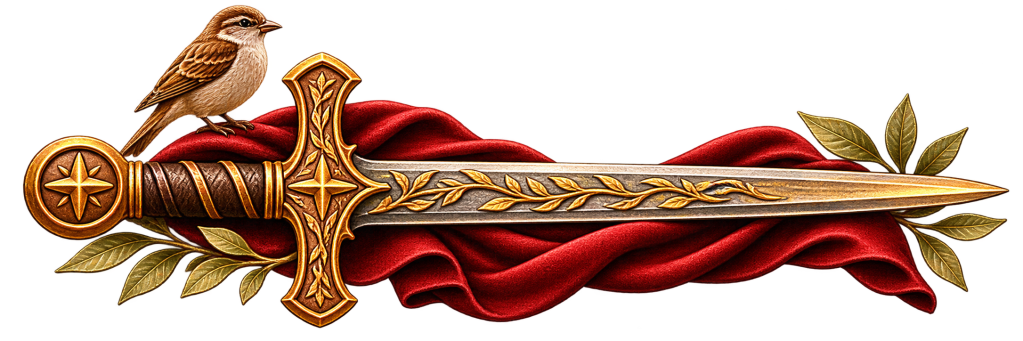
Sword of the Spirit
This is the first piece of armor listed that a Roman soldier could use as both a defensive and offensive weapon. Yes, soldiers could use their shields as weapons, but we normally think of shields as defensive. A sword, however, could protect the soldier and his fellow soldiers while also being used against enemies.
The same applies to us as Christian “soldiers.” The sword of the Spirit is God’s Word, a weapon we can physically grasp through Scripture and treasure in our hearts through memorization. When we’re fighting against the enemy or our own minds, we can fight back with God’s truth.
A sword needs to be sharpened, but not this one. Our minds, however, must be trained to use it well. We must not only treasure God’s Word in our hearts but also allow it to transform our lives. Through obedience and a willingness to be changed by His Word, God strengthens our faith and equips us to resist the enemy.
“For the word of God is living and effective and sharper than any double-edged sword, penetrating as far as the separation of soul and spirit, joints and marrow. It is able to judge the thoughts and intentions of the heart.” – Hebrews 4:12
Prayer
When the Armor of God is preached, we normally stop at the sword of the Spirit. Yet, we can’t ignore what comes next. Though Paul doesn’t call it armor, prayer is just as important in our defense and offense. Prayer may seem passive, but it is an ongoing conversation with our Heavenly Father, the Great Warrior and Defender. We say “Amen”, but we continue to run to Him.
Prayer turns our focus away from the world or even ourselves and toward God. When I’m struggling, I don’t do this perfectly, but I bring it to Him and lay it at His feet. And when my fellow “soldiers” in Christ are struggling, I fight for them in prayer, too.
“18 Pray at all times in the Spirit with every prayer and request, and stay alert with all perseverance and intercession for all the saints. 19 Pray also for me, that the message may be given to me when I open my mouth to make known with boldness the mystery of the gospel. 20 For this I am an ambassador in chains. Pray that I might be bold enough to speak about it as I should.” – Ephesians 6:18-20
This fight isn’t supposed to be fought alone but side by side with fellow believers, through the strength God gives us.
Here is the thing: We sometimes give Satan too much credit. Not every difficulty, trial, temptation, or sin is because of Satan. We’ve heard the saying, “Satan made me do it.” Satan is evil, yes, but he can’t make believers do anything. Can he whisper temptations and doubts in your ear? He can, but we are also capable of enough evil on our own. Not every bad thing, including natural disasters, is Satan’s doing. We live in a broken world, and we are broken people.
“14 But each person is tempted when he is drawn away and enticed by his own evil desire. 15 Then after desire has conceived, it gives birth to sin, and when sin is fully grown, it gives birth to death.” – James 1:14-15
This is why we’re thankful for grace and God’s continued work of transformation in our lives. Putting on the full Armor of God isn’t a one-time thing. We must actively prepare for spiritual warfare, including doing battle with ourselves.
But while we sometimes give Satan too much credit, we can also fail to give him enough.
“8 Be sober-minded, be alert. Your adversary the devil is prowling around like a roaring lion, looking for anyone he can devour. 9 Resist him, firm in the faith, knowing that the same kind of sufferings are being experienced by your fellow believers throughout the world.” – 1 Peter 5:8-9
We might not see Satan and his followers, but they are present. They can’t harm God, but they can target His children. I have witnessed firsthand how dark and evil their attacks can be. Scripture reminds us, however, that Satan is not beyond God’s authority.
Look at Job. Satan had to receive God’s permission before he could touch Job and his family. We don’t like the thought that God would allow such suffering, but there are things we won’t understand on this side of heaven. Yet, Job’s story reminds believers that they aren’t alone in their suffering. I wonder if that might be another reason God allowed it.
Did Satan win that battle? It probably felt like it, but God did remarkable and glorious things after tragedy struck.
Through His death and resurrection, Christ won the ultimate battle. Satan will not win in the end, but he isn’t going to go down without a fight. So, we must fight back.
Satan is not ever-present, all-knowing, or more powerful than God, yet there is more happening than our earthly eyes can see. For some, he seems like a passive inconvenience who nonchalantly trips us up here and there.
Can I make an observation here? I might be wrong, but if you don’t see him as a prowling, roaring lion, it might be because he has left you alone. Why? He might not see you as a “threat.” If you’re complacent in your walk with God, perhaps he wants you to stay comfortable. Why disrupt someone who is already complacent? Again, I could be wrong, and I know there is more to the story, but this could be part of it. As I mentioned before, not every temptation or trial is from the devil. Sometimes God allows difficulties to “wake us up” from our spiritual complacency and draw us nearer to Him. We may not even recognize our complacency until we’re confronted with it.
Either way, if Satan were just a passive inconvenience, why would we need armor?
Do we ready ourselves with armor out of fear? No, we do this boldly because God, in His faithfulness, has equipped us with everything we need to resist our enemy and do battle.
We must acknowledge that, since we’re not perfect, we will fail, sometimes miserably. But God gives us the strength and grace to get up again, straighten our helmet, hold on tighter to our sword, and press on.
So, be readied for battle and never give up the fight, knowing that we will see the battle’s completion and God’s victory over our enemy.
Selah: How are you preparing for battle today? How seriously have you taken Satan’s attacks up to this point? Do you find him to be a passive inconvenience, or do you see him as a prowling, roaring lion? What part of the armor do you need to practice putting on today?


Leave a Reply